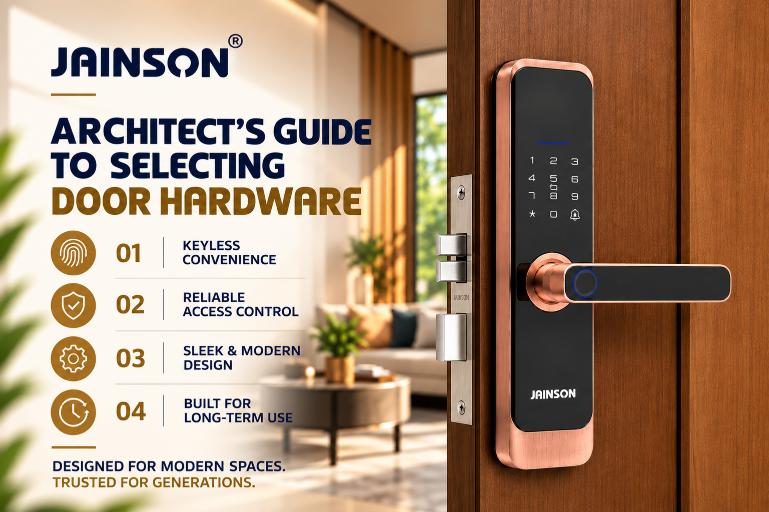
Door hardware plays a very important role in architectural designs, in addition to the look, the correct door lock, latch, cylinder or digital access control solution can highly impact security, usability, durability, user convenience and maintenance. To architects, a door hardware selection isn’t just about picking an attractive product. Doors are used in different ways and for different things in each property. A security system on the front of a residence may need more than a typical office interior door. Likewise, a hotel or commercial building may need heavy duty hardware that can withstand frequent uses.
This guide covers some of the major aspects of the choice of door hardware for residential and commercial applications
Door hardware is used repeatedly in the life of a building. Selecting the wrong hardware may result in early wear and tear, a hard to operate system, security issues and maintenance expenses.
When choosing a product, architects should think of these pointers:
The specification of the hardware is planned accordingly, and the chosen hardware products are suitable for the architectural design and practical use of the building.
The first step is to determine the use for each door.
No universal lock is available that fits all applications. The mechanism should be chosen based on the architect’s needs and the intended use of the door.
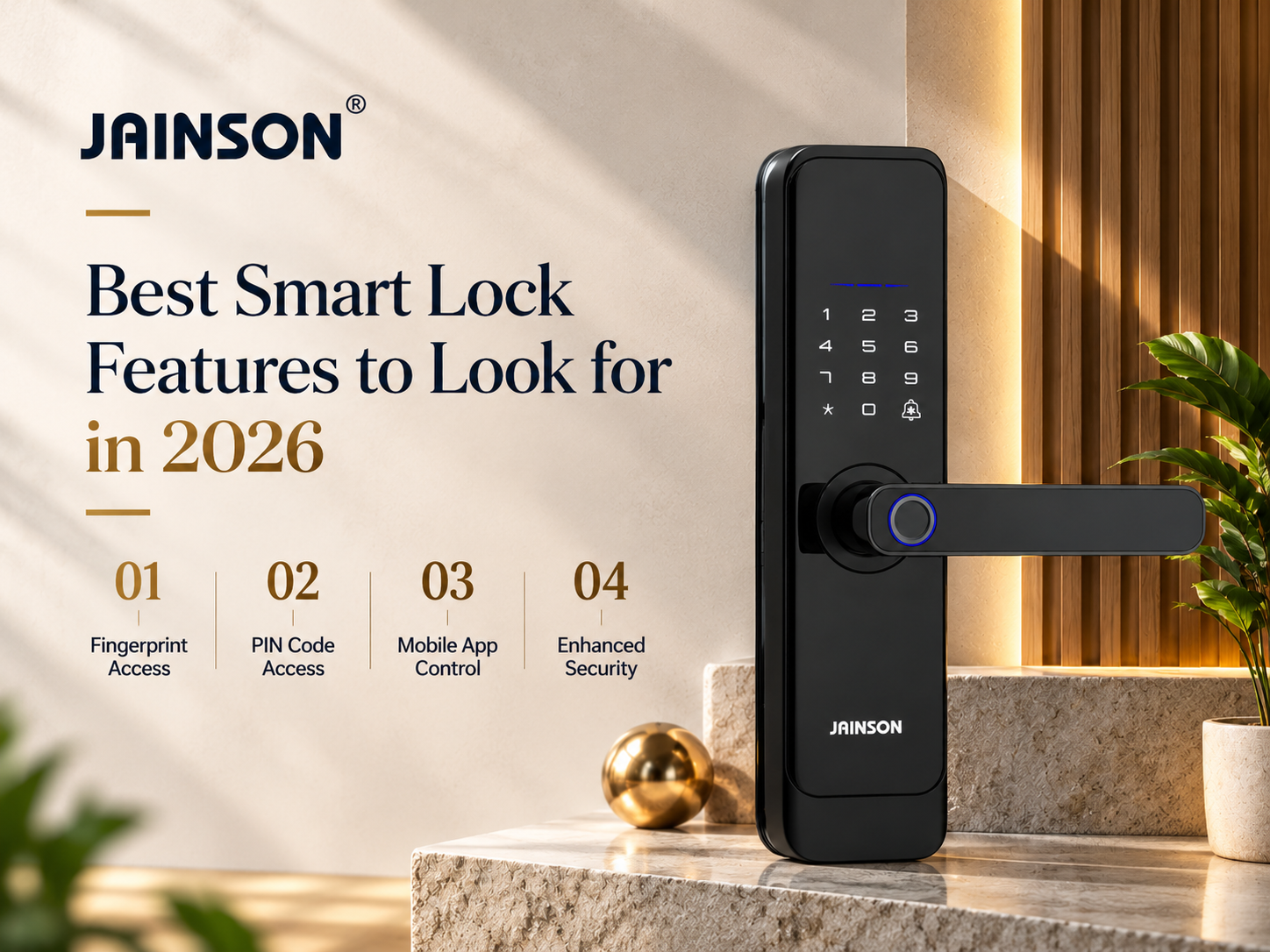
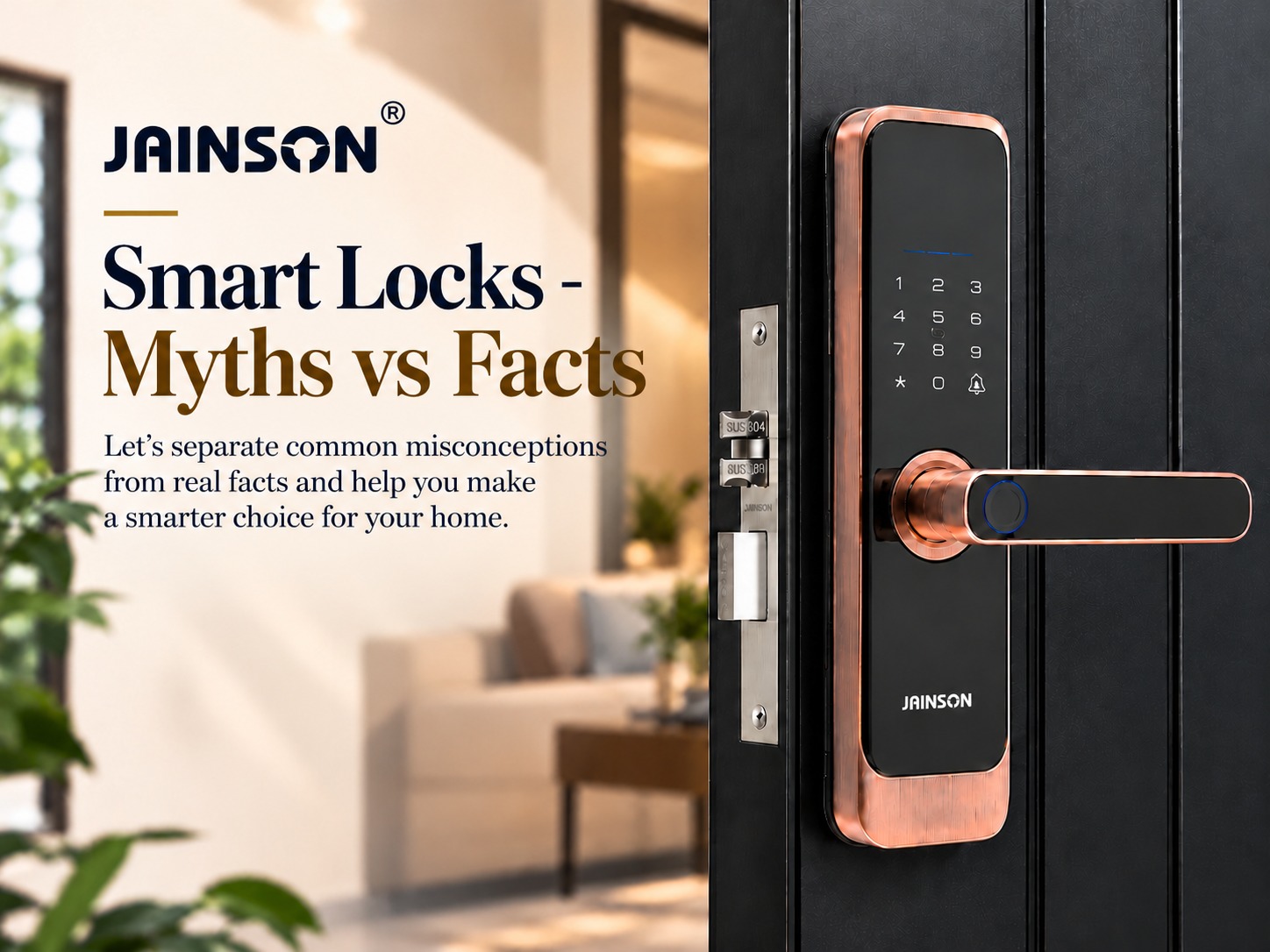
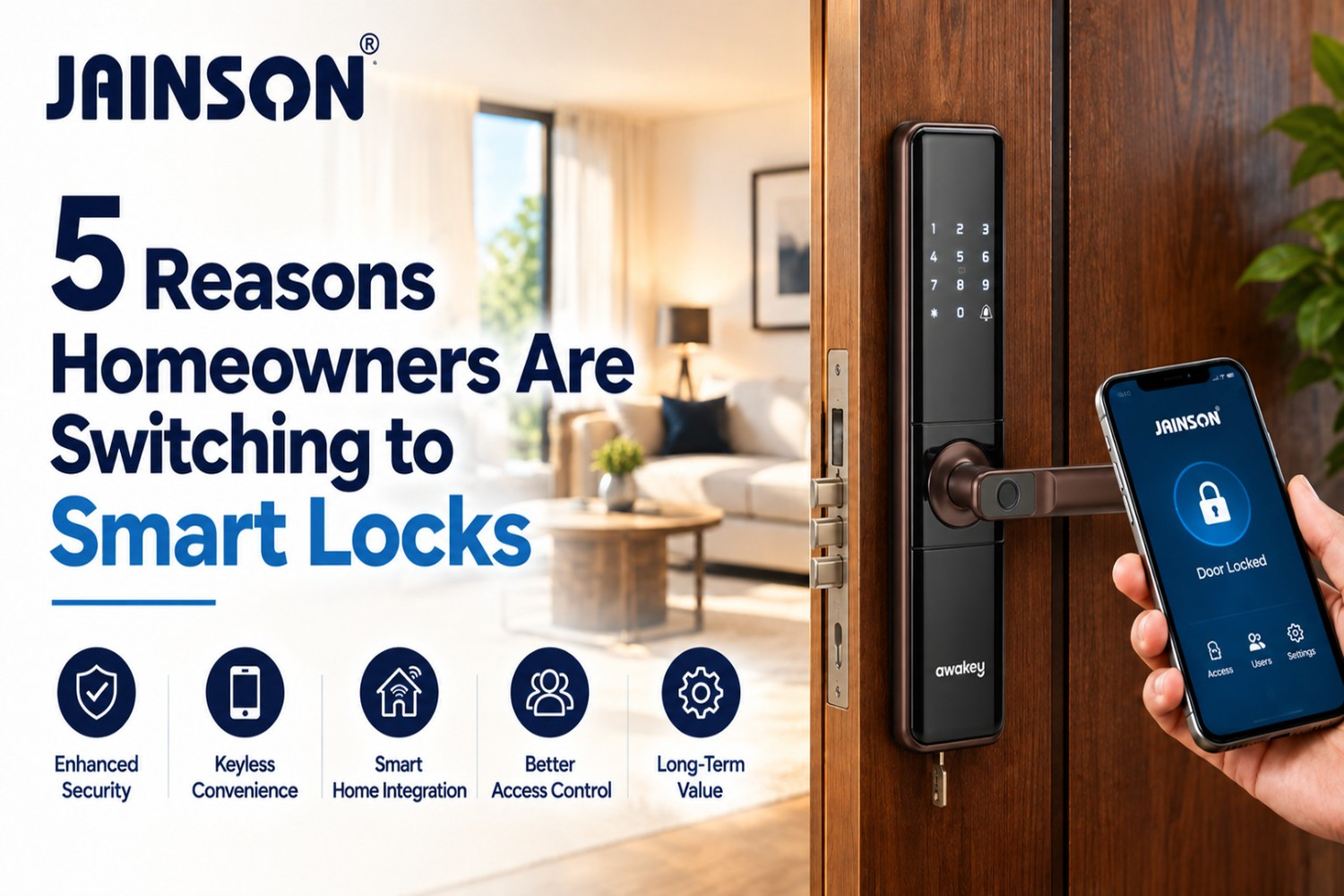
Smart locks are taking the Indian architecture industry by storm. They can provide keyless entry, several authentication schemes, temporary access and access management depending on the model.
In the design and planning of smart locks in India, the following considerations should be taken:
The smart technology should be chosen according to the needs of the project. If the features are not required for application, more and more features do not imply a better solution.
Security needs can be different for different doors. For instance, a bedroom might need privacy-enhancing hardware and a primary entrance may need more secure hardware. Controlled access might be needed in a restricted storage area or server room. There is no one best door lock for home security, as there are many home security locks to choose from. This selection will depend on the construction of the door and frame, ease of installation, location, security level and access method.
Therefore, the entire door assembly should be looked at by the architects and not just the lock.
The type and the construction of the door determine the hardware choice.
Architects should first check, before specifying a lock:
Different types of hardware may be needed for wooden, metal, glass and composite doors. You might not be able to use a product that’s intended for a standard wood door on a frameless glass door. Proper compatibility can facilitate installation and ensure reliable performance.
In high-traffic areas, door hardware can be used hundreds or thousands of times during the life of the door. Durability should therefore be an important consideration for commercial and institutional projects.
In particular, hardware should be carefully selected for use in:
Heavy-duty door locks and well-designed hardware may be able to solve the issue of frequent use in demanding applications. The environment also needs to be taken into account, hardware that will be exposed to humidity, dust or other adverse conditions should be constructed and finished in an appropriate manner.
Door hardware is something that is seen inside a building. Handles, locks, cylinders and escutcheons should fit into the overall design of the project.
Architects can work in conjunction with:
Some modern buildings might be best suited to have a minimalist hardware design and some traditional buildings might benefit from more decorative hardware designs. Appearance must not affect functionality or security because the objective is to achieve an appropriate balance between architectural style and performance.
Door locks should be simple to use for the people who are buying it. Architects should take into account the frequency of use and the users of the door. Convenience might be a top goal for residential projects, whereas controlled access for staff, visitors and administrators may be a priority for commercial projects.
For digital and smart systems, user experience is particularly important. It is important that the architects think about whether the method is easy to understand and what may happen if there is battery failure or a network failure. Access for emergencies and as a backup should also be taken into account at the specification stage.
The purchase price of a lock is just one component of total cost. Installation, maintenance, replacement parts, battery requirements, warranty, service support and expected service life are all also important factors that should be taken into consideration by architects. Students must look at the following aspects of a door lock manufacturer in India: the quality of the product, the technical documentation of the product, the nature and scope of the product, the availability of spare parts, support services and the manufacturing capabilities.
Jainson Locks provides door lock solutions in India for residential and commercial uses, enabling architects and project teams to consider the hardware for its intended use, security and design needs.
A door hardware schedule is useful in larger projects to coordinate the needs of the architect with the contractor, supplier and installer.
A simple timetable can consist of:
| Door Application | Lock Type | Security Level | Access Method |
| Main Entrance | Digital / Smart Lock | High | PIN / Biometric / Key |
| Bedroom | Privacy Lock | Medium | Mechanical |
| Office | Cylindrical Lock | Medium / High | Key / Card |
| Storage Room | Deadbolt | High | Key |
| Apartment Entrance | Main Door Lock Set | High | Key / Digital |
The schedule should be completed prior to procurement, in order to ensure that all hardware needed for each opening is identified.
Even though you buy a quality lock, if it is not installed properly and right, it may not work correctly. Installers must ensure that all the door, frame, latch, cylinder and strike plate are aligned properly and adhere to the manufacturer’s instructions. Common problems are incorrect drilling, poor alignment, loose hardware, incorrect backset and the thickness of the door isn’t compatible with the piece. Installation should be inspected prior to final handover by architects and project managers.
Choosing door hardware is a crucial architectural choice that encompasses security, usability, durability and style. While traditional mechanical locks are still in use more sophisticated electronic and smart locks are also available, with the option depending on the needs of the door hardware. These are all factors that architects should take into account when deciding on the hardware for their use of a door.
From the Main door lock sets to cylindrical door locks, night latch door locks, heavy-duty door locks, to smart and digital door locks, a well-defined specification process can help ensure that the hardware not only aligns with the design and functions of the building but also remains compatible with the existing infrastructure. Under proper planning and product selection, door hardware can be a successful mixture of security, convenience, durability and architectural style. For projects looking for the right door-locking solution for homes and businesses, Jainson Locks are a part of the hardware testing process.
When choosing the right hardware, architects must take into account the function, security needs, material, usage, design, installation, maintenance needs and cost.
Locks are determined by the type of door and security level required for the main entrance. They can range from deadbolts, cylindrical locks, digital locks, smart locks and other specialised entrance-locking systems.
Yes. Smart locks in India can be used in residential and commercial properties where an entry key is needed, multiple forms of authentication are desired or access needs to be controlled.
Architects should consider traffic, door weight, construction, durability, installation, environmental factors and service life for heavy door locks.
For best door lock home security homeowners should take into account the strength of the door and frame, installation, the level of security required, access needs and mechanical vs. electronic access.
Trustworthy manufacturer would be able to offer the right products, technical information, instructions for installation, spare parts, warranty maintenance and after-sales services, which can be beneficial for both home and project use. So you can choose Jainson Locks – a reliable door lock manufacturer in India.