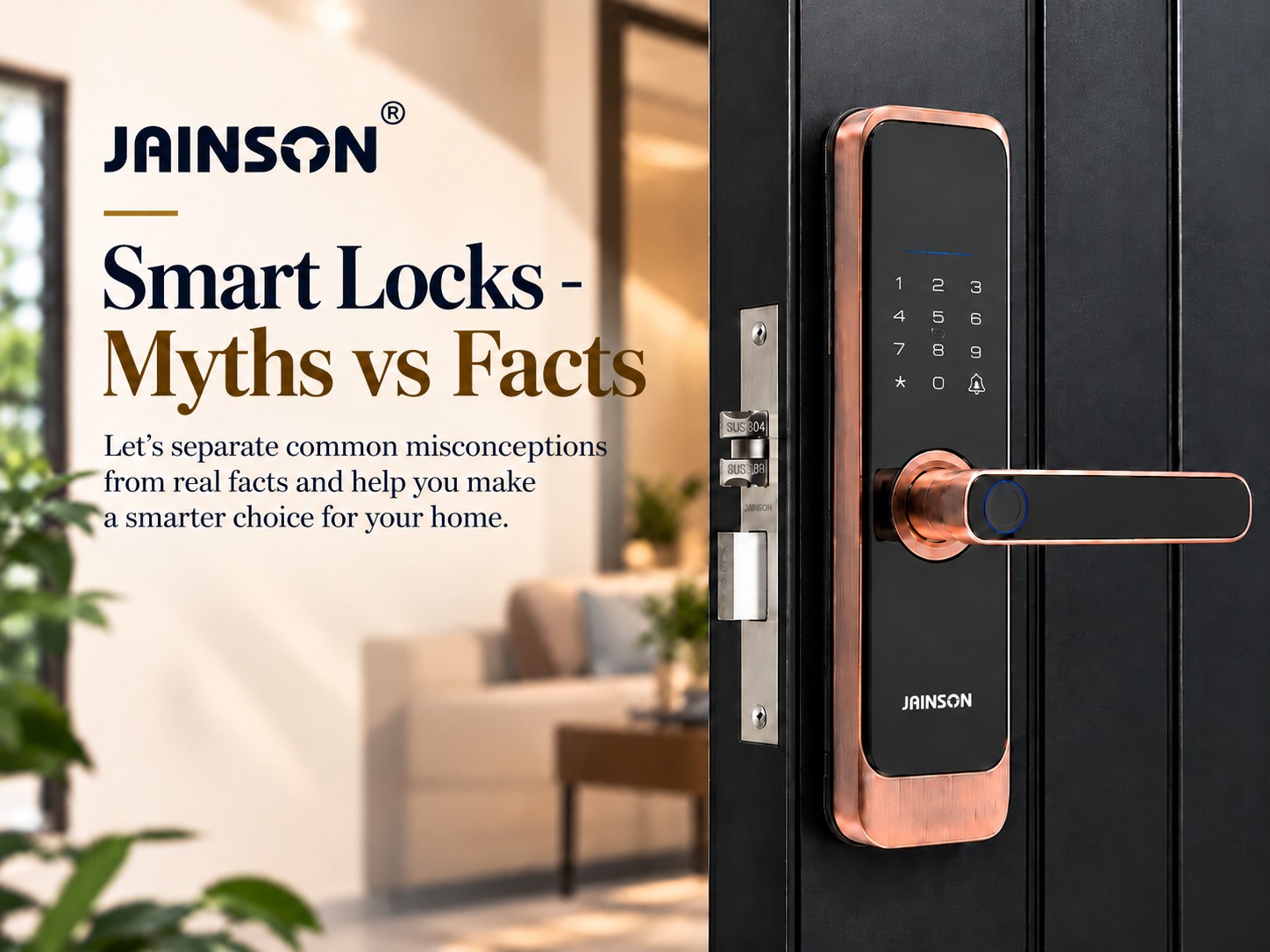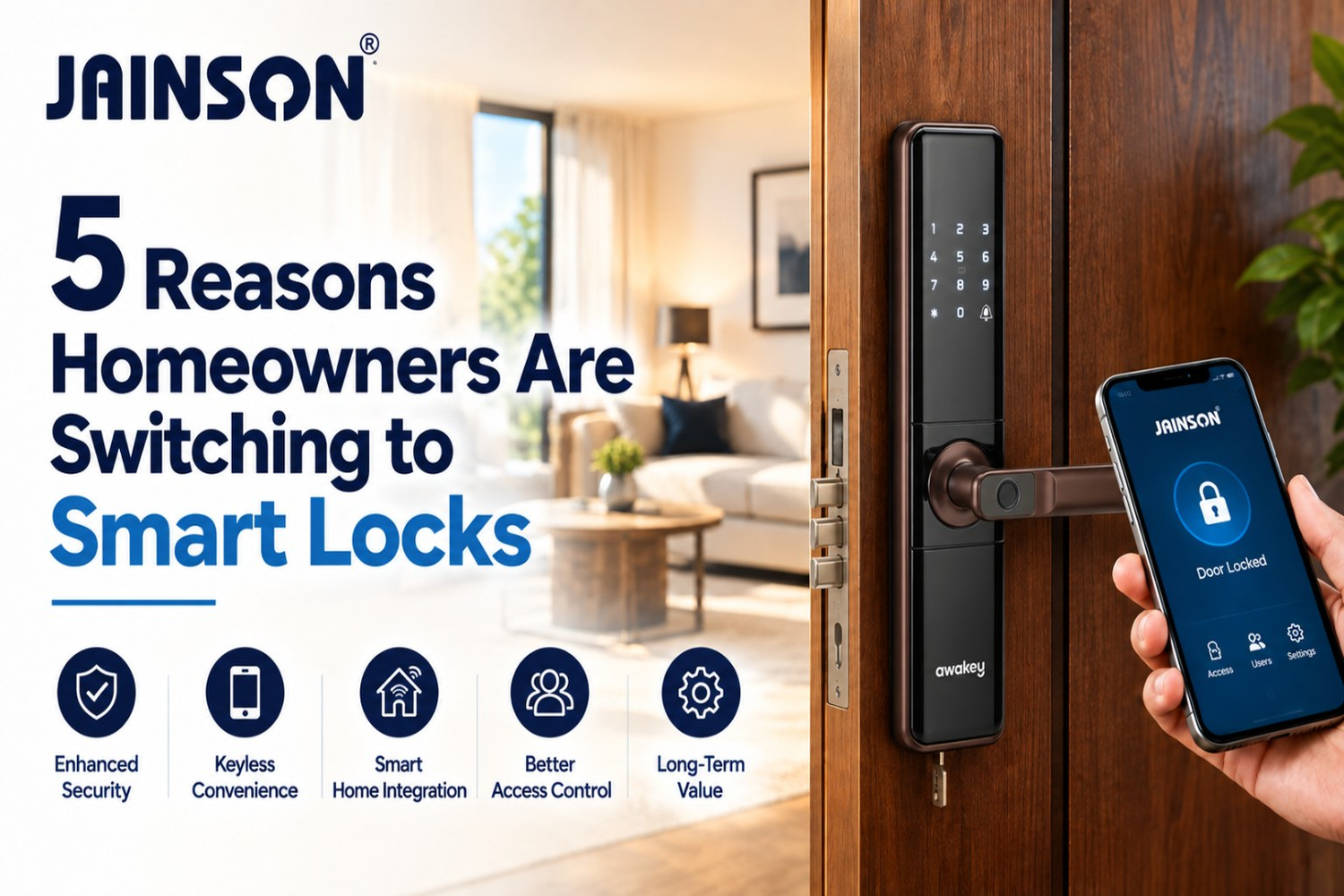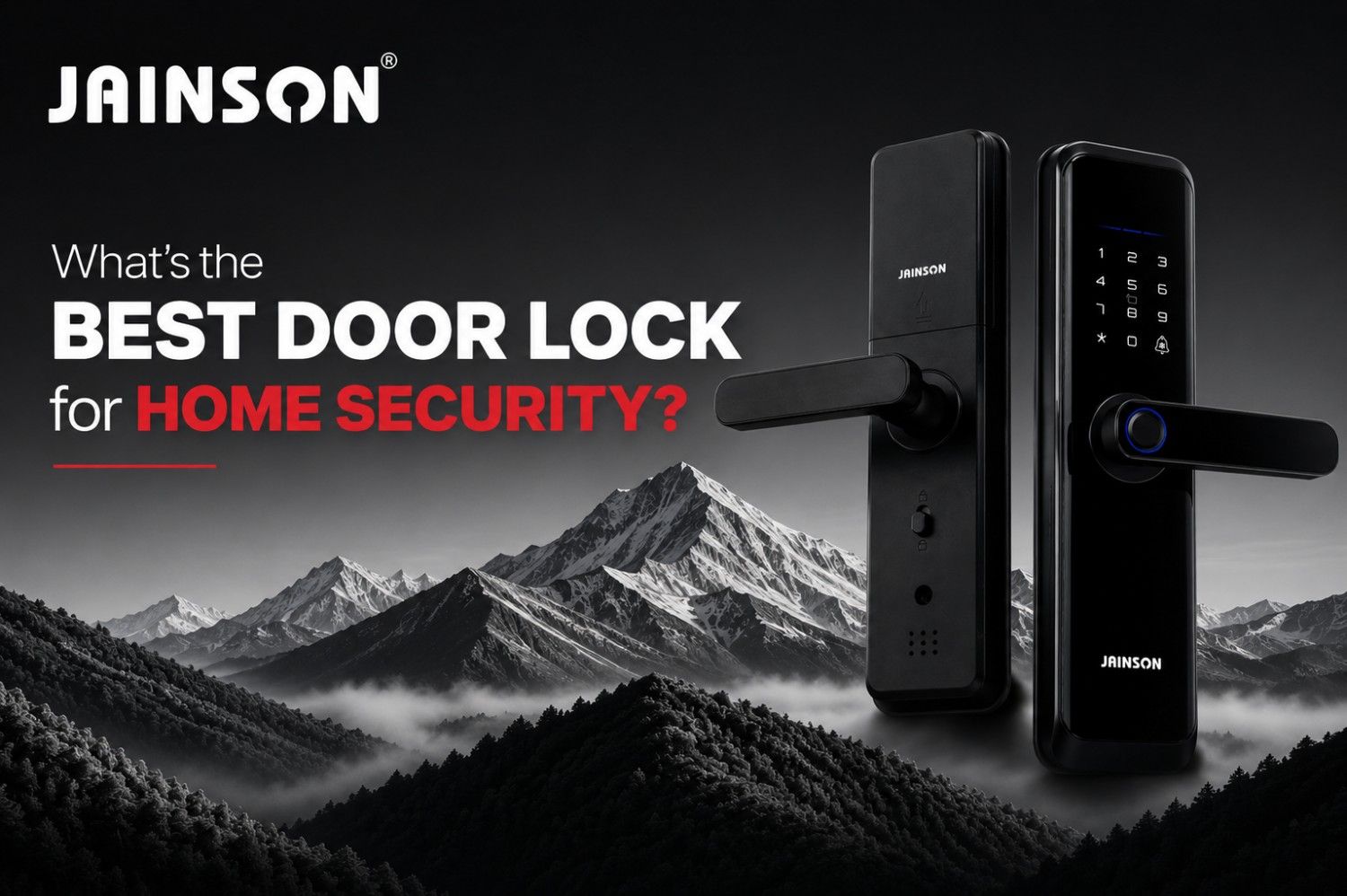
Fingerprint door locks in India are a popular alternative to traditional locks and part of the evolution of home security. These are smart locks that provide keyless entry through fingerprint recognition technology, making them convenient and secure to use.
This door lock is different from normal locks that are physically operated using keys, because users won’t need a key to open their door; simply put your finger on a scanner. Most refined models also use PIN codes, RFID access cards, mobile application security, and emergency key release. The demand for biometric door locks has been rising among people, apartment owners, office managers and commercial property owners in India.
In this guide, we discuss the working principle, security features, advantages, and fingerprint door lock prices in India.
A fingerprint door lock in India is an electronic door locking system that operates by verifying the identity of the user before letting them in. It scans the fingerprint and compares it with the fingerprint data stored in the device. If the fingerprint matches, the electronic locking mechanism unlocks the door.
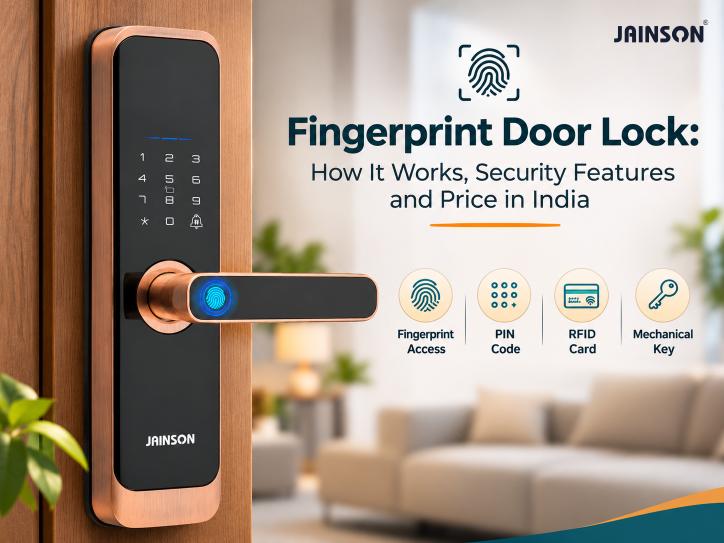
Today’s smart fingerprint door locks in India can be opened in a variety of ways, such as:
Fingerprint scanning
PIN or password access
RFID cards
Smartphone applications
Mechanical keys for emergencies
These variety of choices allows electronic door locks to be used in homes, offices, hotels and commercial properties.
There are three primary processes that a fingerprint door lock uses: scanning, authentication, and electronic unlocking.
Step 1: Fingerprint Registration
The administrator enters the authorised fingerprints into the memory of the lock. Sensor collects fingerprint traits to form a digital biometric template.
Step 2: Fingerprint Scanning
People wishing to enter slide their enrolled finger to the scanner. The sensor collects the fingerprint patterns.
Step 3: Biometric Authentication
The internal processor scans the fingerprint and compares it with the registered biometric data. If the information matches, access is granted.
Step 4: Electronic Unlocking
Once successfully authenticated, the motorised locking device unlocks the locking bolts and the door unlocks.
Step 5: Automatic Locking
Many high-quality models have automatic locking features with closing to stop accidental security breaches.
There are a number of features that make modern biometric door locks more convenient and efficient in terms of access management.
Biometric Authentication: Allows authorised users to enter using registered fingerprints.
Anti-Peep Password: Some models offer a way to enter random numbers around the actual password to avoid the possibility of observing the password.
Multiple User Registration: Permits multiple family members and/or employees to have access to the property.
Auto-Locking: The door will automatically lock when it is closed.
Tamper Alerts: Some models warn of tampering.
Mobile App Control: Advanced models feature user management, activity notifications and remote access.
Emergency Key Backup: Offers another way to unlock in the event of an electronic failure or battery malfunction.
The availability of these features depends on the model. It is also essential to use a good mechanical locking system and to install it properly.
Many factors influence the cost of a fingerprint door lock in India: these include its brand, sensor technology, quality of material used in its construction, type of locking system and added features.
| S. No. | Type of Fingerprint Lock | Approximate Price (INR) |
| 1 | Basic Fingerprint Padlock | ₹800–₹3,000 |
| 2 | Entry-Level Biometric Door Lock | ₹5,000–₹9,000 |
| 3 | Mid-Range Smart Fingerprint Door Lock | ₹9,000–₹17,000 |
| 4 | Premium Fingerprint Door Lock | ₹17,000–₹30,000 |
| 5 | Advanced Biometric Smart Lock | ₹30,000+ |
These prices are estimates and may vary depending on the manufacturer, model, installation and warranty.
When buying, check the fingerprint recognition, locking power, battery life, emergency unlock and warranty services.
There are several benefits to fingerprint door locks in comparison to standard locks.
No Physical Keys: No need to keep physical keys with you. Easy access with your registered fingerprint.
Better Access Management: These locks can be used in families and offices, as multiple users can be registered.
Reduced Risk of Lost Keys: Decreases the risk of lost keys and the need for them to be duplicated.
Quick Entry: The average time for a fingerprint to be recognised is only a few seconds.
Multiple Unlocking Options: Several Unlocking Methods: Finger print, PIN, RF card, and mechanical keys are many of the unlocking methods supported by multiple models.
Modern Appearance: Smart home door locks in India come in fashionable styles and designs that are suitable for modern interior decor.
The design and compatibility of fingerprint door locks will determine the types of properties that they are suitable for.
Residential Homes: Family members will have convenient access.
Apartments: Keyless access for contemporary housing units.
Corporate Offices: Employee/Authorised Visitor controlled access.
Hotels and Guest Houses: Electronic access management to guest rooms.
Commercial Properties: Extra access control for shops, showrooms and business properties.
When installing, always check the material, thickness and locking system of the door.
When you’re looking for the best fingerprint door lock in India, you need to take both your security needs and budget into account.
Test Door Compatibility: Make sure that the lock is compatible with the thickness and material of the door.
Choose a Reliable Sensor: Ensure the sensor is highly consistent in recognising fingerprints and has high reliability.
Check Emergency Access: Mechanical keys or external emergency power options.
Consider Multiple Access Methods: Fingerprint, PIN, RFID and key access are more flexible.
Check Battery Performance: Learn about battery life and low-battery indicators.
Confirm Warranty: Confirm whether or not the manufacturer provides support and service.
Choose Professional Installation: If you select a proper installation, it will ensure smooth locking and reliable operation.
Fingerprint door locks are the next step in the security of homes and offices, offering biometric authentication, keyless entry and convenient access control. They provide a modern and better solution to traditional locks and extra capabilities that are much better utilised in normal life. When buying, look for the quality of the sensor, its durability, battery life, security measures, and warranty.
Jainson Locks recognises the significance of blending convenience, state-of-the-art technology, and reliable locking systems. Selecting the right biometric door lock can result in an easier and safer way to access your home, as well as make your property more secure. Discuss appropriate security options with Jainson Locks and be more savvy about your door security.
1. What is a fingerprint door lock and how does it work?
A fingerprint door lock is a biometric security device where an individual’s fingerprint is used to unlock the door. It has a fingerprint sensor, which is used to check the fingerprint features and match them with fingerprint information registered in the device.
If the fingerprint matches a registered person, the electronic lock opens and unlocks the door. If the fingerprint doesn’t match, access will not be granted. Most modern smart fingerprint door locks also have alternative unlocking methods, such as a PIN password, RFID card and mechanical keys, so that they can be unlocked if fingerprint recognition fails.
2. What is the price of a fingerprint door lock in India?
The price of a fingerprint door lock in India typically ranges from ₹800 to ₹30,000, with the variation depending on the type and complexity of the lock.
The price of entry-level residential biometric door locks ranges from ₹5,000 to ₹9,000 and mid-range models could cost ₹ 9,000– ₹17,000. The premium models can sport advanced connectivity and security options, which can cost ₹17,000 to ₹30,000 or even more.
The cost will vary according to the brand, quality of the fingerprint sensor, locking mechanism, material, smart capabilities, installation fees and warranty. People should not only consider the price while purchasing the lock, but they also need to consider the specifications as well.
3. Are fingerprint door locks safe for home use?
Yes, a quality fingerprint door lock for the home can be used to ensure secure access control for homes. Biometric authentication restricts access to the system using fingerprints to registered users, and also minimises reliance on physical keys. But the overall security also relies on the locking bolts, door frame, materials used, installation and electronic security.
To ensure greater security, look for a device that has secure storage for biometric data, mechanical key backup, tamper protection and a robust lock. Keep in mind that there is no electronic lock that can’t be tampered with.
4. Can a fingerprint door lock work without an internet connection?
Yes, most e-d locks with fingerprint authentication don’t require the internet, as the fingerprint is usually handled at the point of use.
Registration of fingerprints and unlocking the door are generally possible even without the use of Wi-Fi. But some advanced features like remote unlocking, cloud-based access records, and smartphone notifications might require the use of the internet.
Some Bluetooth enabled models can also provide local connectivity with smartphones without the need for an Internet connection. Be sure to read the manufacturer’s specifications to determine what is available without an internet connection.
5. What happens if the battery of a fingerprint door lock dies?
The best smart fingerprint door locks have an emergency access feature to keep users from becoming trapped in the event of a battery failure.
These can vary with the model, whether it be a mechanical key, an external emergency power source or low battery warnings.
Replace the battery if weak, as per the manufacturer’s instructions. It’s a good idea to have the emergency key in a place that is not within the locked-off house. Always have battery backup and emergency unlocking features of the lock before buying.
6. How many fingerprints can be stored in a biometric door lock?
Fingerprint memory of a biometric door lock is determined by the model and internal memory. Simple biometric locks can hold a few users, and more sophisticated smart door locks hold dozens or even hundreds of fingerprints. When using at home, opt for the suitable size that meets the needs of the entire family. Higher user capacity can be more appropriate for an office or commercial property.
Some locks also permit several fingerprints to be stored for a person. Useful when one finger is soiled, damaged, watery or hard to identify.
Do not rely on manufacturer’s specifications when buying.
7. Can a fingerprint door lock be installed on wooden and metal doors?
While it’s true that fingerprint door locks can be used on wooden and metal doors, not all models are compatible. When buying, verify the thickness, material, installation, dimensions, and locking method of the door.
A few models are developed specifically for wooden doors, and others are made for metal doors and gates. Installing it yourself is recommended, as proper alignment of the locking bolt to the door frame will help performance. Check compatibility with the manufacturer and Installer.
8. What are the main advantages of a biometric door lock compared with a traditional lock?
There are several benefits to a biometric door lock system in comparison to a traditional key-based locking system. The biggest benefit is keyless entry. The door can be unlocked by users with their registered fingerprints without having to carry a physical key.
Other benefits include a number of user registrations, ease of access management, prevention of lost keys, and other useful options like mobile app connectivity and auto-locking. Older locks are typically simpler and will not need batteries. But modern homes and offices can benefit from further convenience and access control with digital door locks.
9. Can a fingerprint door lock be hacked or bypassed?
A fingerprint door lock is like all other electronic security devices that have vulnerabilities. The security relies on a biometric sensor, authentication software, electronic components and a mechanical locking mechanism. Lower quality products could be less well protected from tampering and have less robust authentication.
To minimise risks, select a proven, secure product that has a robust mechanical build and includes tamper alerts, and, if available, has regular software support. Ensure PIN passwords are strong, don’t give them out if it’s not necessary, and if they can, make sure the lock’s software is updated.
10. Which fingerprint door lock is best for a home in India?
The right fingerprint door lock in India varies according to the security features they desire, the door type, family needs and budget.
For home use, search for a secure fingerprint key and PIN entry smart door lock that also has mechanical lockback, automatic locking, low battery alerts, and a robust locking system for most residential installations. For extra convenience, look for models that are compatible with RFID access or smartphone applications. In addition, consider the warranty coverage, installation support, battery performance, and after-sales service. Don’t go for the highest-cost one, but pick a lock that provides the security, durability, compatibility, and convenience you need.