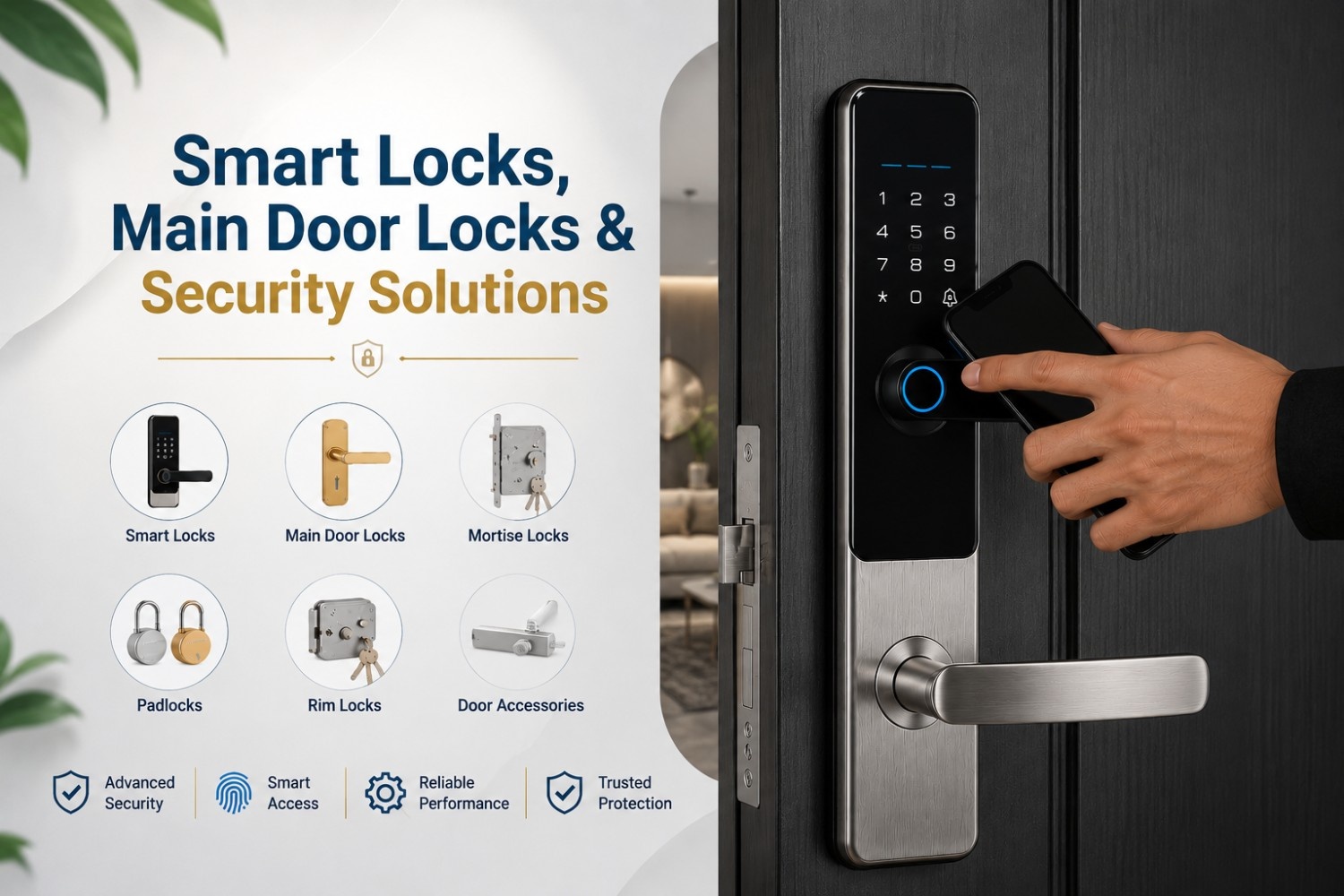
A key and lock aren’t the only means of home security. When technology is a part of daily life, homeowners are also interested in more intelligent access control in the home. One example of this change is the smart lock in India. The electronic locking system can be based on fingerprint, PIN, smart card, smartphone, Bluetooth, or other means of authentication. Other models can also link up to larger smart home systems. As per the latest market studies, the Indian Smart Lock market is anticipated to attain USD 65.25 million in 2025 and will be anticipated to turn out to be substantial till 2034. As per another market analysis, the Indian market is estimated at USD 56.7 million in 2025 and is expected to grow at a CAGR of 26.9% during 2026–2033. The difference in the figures can be attributed to the methodology adopted by the various market research companies, but clearly both are pointing towards more growth.
So why do more homeowners want to think about swapping out the old locks?
Let’s discuss 5 important reasons.
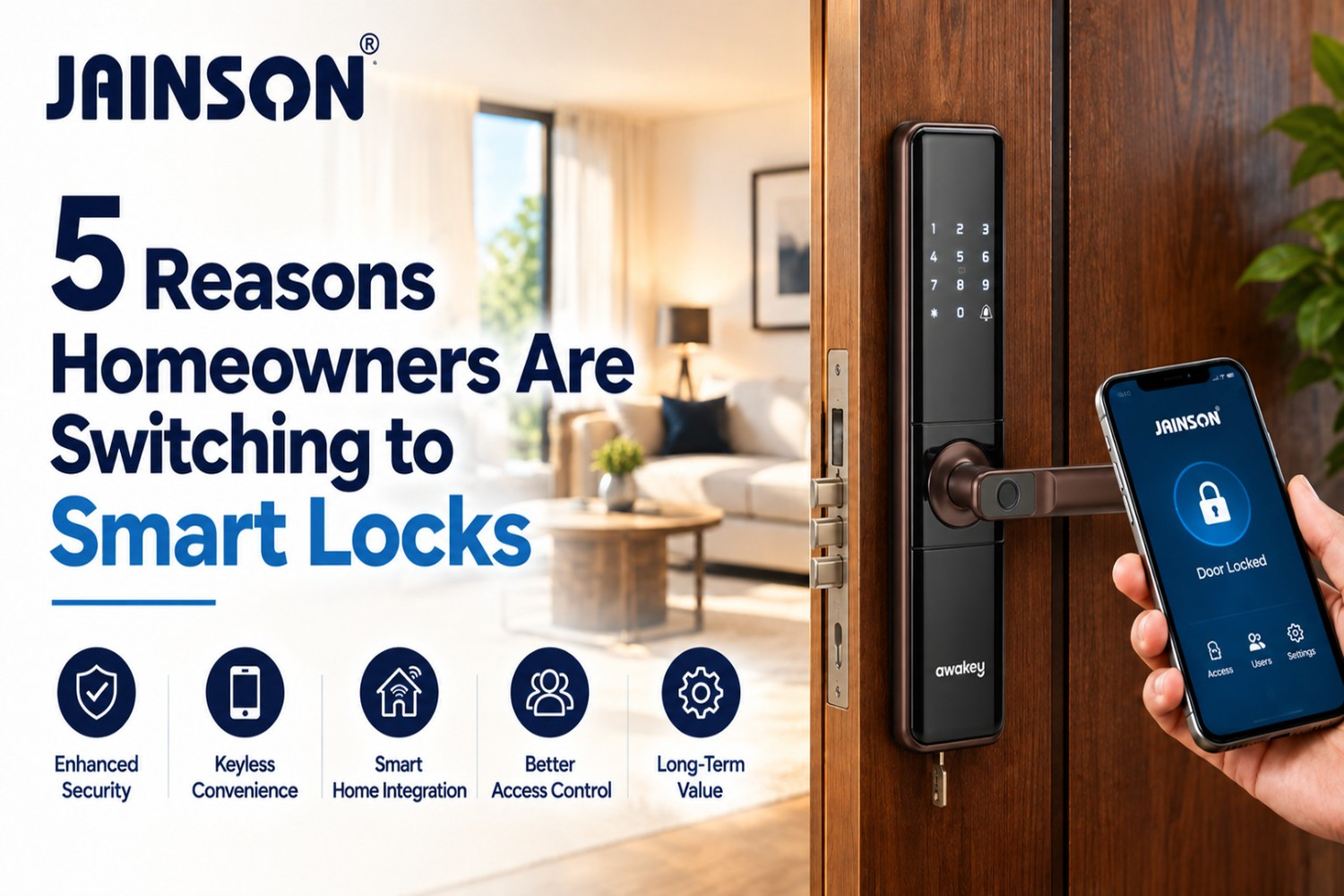
The most straightforward advantage of an intelligent lock is offering entry to a house without depending totally on a physical key. Keys can be lost, forgotten, duplicated, or inadvertently locked in a property. Smart locks offer other means of authentication for an authorized person.
Access may be achieved by means of (depending on the model):
A digital smart lock for home can also help minimize the need to have duplicate physical keys. Rather, compatible systems can offer various means of accessing the information to authorized users.
Traditional locks vs. smart locks
| Feature | Traditional Lock | Smart Lock |
| Physical key | Required | Optional, depending on model (Physical key in smart locks is for backup only) |
| Fingerprint access | No | Available on compatible models |
| PIN access | No | Available on compatible models |
| RFID access | No | Available on compatible models |
| Smartphone access | No | Available on connected models |
| User management | Limited | Available on some connected systems |
| Activity records | Generally unavailable | Available on some models |
Everyone doesn’t want the same approach to entry. One of the reasons why biometric and contactless technologies have been important features in modern access systems.
A smart door lock with fingerprint can be programmed to accept an authorised person’s fingerprint for unlocking the door with the help of a fingerprint reader. This eliminates the need to have a key or PIN to open each entry. RFID smart locks in India are an alternative. The user can be authenticated with a registered card or tag without the need for a physical key.
There are various methods of smart-lock authentication that are common.
More options in family homes, as each member chooses what they prefer.
Biometric and digital access should not be assumed to be risk-free, however. There is still a need for proper design, configuration, and protection of the authentication technology. The NIST guidance on the cybersecurity of IoT devices includes the need for identification, authentication, and access control of connected devices. It specifically refers to the requirement for devices to be able to differentiate between authorized and unauthorized users, and facilitate the use of authentication methods.
Smart locks can do more than just allow keyless entry if paired with a smartphone or home network. Depending on the App, app-controlled door locks may allow certain functions of the locks to be managed via a mobile application by compatible users.
These functions may include, depending on product and connectivity setup:
A digital system that is compatible could make it easier than giving over a physical key. The “out of home” remote access feature can be helpful as well if the homeowner isn’t there. But this functionality is dependent on the connectivity, application, network, and configuration of the lock.
Which is why users need to make sure they know what connectivity options are needed to use a particular model before considering app functionality to be guaranteed wirelessly.
A traditional key typically doesn’t provide any information about who used it or when. Smart locks can be connected and give access records or activity information. This can be a benefit to homeowners because it provides them with more insight into the use of the lock.
Digital access management can also help to simplify permission changes. For temporary users, if access is no longer required, then their credentials can be removed or disabled, depending on how user management is implemented on the system(s).
It’s a significant difference between the replacement of a key to a digital mechanism and a true smart access-control system.
Access management can potentially provide:
The connected access systems also have a cybersecurity component. NIST points out that IoT products bring new cybersecurity challenges; organizations should take security into account when selecting and implementing IoT products. For residential users, this means reviewing aspects such as accounts, authentication, software updates, connectivity, and user permissions.
In addition, a larger trend of smart-home technology is providing a benefit to smart locks. Another part of this ecosystem can be a compatible smart lock.
It is not just that a lock is a modern technology that makes it attractive to homeowners. The bigger advantage may be greater flexibility regarding access to the home.
Why connected access is in the spotlight.
With the ongoing advancement of connected-home technology in India, smart locks are emerging as a viable solution for homeowners seeking convenience and flexibility in their home access and management. Jainson Locks is a component of this greater trend in modern, tech-savvy home security.
Jainson Locks sits on the edge of this evolving home-security environment, as consumers try to understand and embrace a digital and keyless way to get into their homes. Meanwhile, smart technology needs to be considered as part of a comprehensive home-security strategy. Having a secure method of backup entry is still important, as are proper installation, secure credentials, battery management, and software updates.
FAQs
Yes. Smart locks include an authentication system either through fingerprint, PIN, smartphones or RFID smart locks in India. Nowadays, the Wi-Fi gateway is configured as a separate device, so one can easily switch it off and keep hackers at bay. Jainson Smart locks come with an SS 304 bolt with fire resistance to keep homes safe and secure.
Yes. Smart locks can now be used with fingerprint, PIN, RFID, Bluetooth and more without requiring an active WiFi signal. The wifi function enables them to be operable from around the world; however, the wifi system can be built into a lock or configured through a separate WIFI gateway.
While many smart locks can be installed on existing doors, it will depend on the type of door; wooden doors can be installed with smart locks, and nowadays, double doors and glass doors also have compatible smart locks. The door thickness should be at least 30 mm or 35mm and up to 60 mm.
Yes Absolutely. Smart locks in India could be appropriate, especially since Indian households have multiple users and people of all age groups living together, so access becomes easy for all and dependency reduces. It also brings convenience for maids and milkmen, enabling more freedom for new-age home runners.